Är väl trevligt när domstolar inte är partiska kan jag tycka. Men jag kanske förstår dig lite fel...
jag menar att domstolarna skall vara helt obundna av oavsett vilket partifärg som styr landet.

Är väl trevligt när domstolar inte är partiska kan jag tycka. Men jag kanske förstår dig lite fel...
jag menar att domstolarna skall vara helt obundna av oavsett vilket partifärg som styr landet.

jag menar att domstolarna skall vara helt obundna av oavsett vilket partifärg som styr landet.
Tja, men partisk  http://www.synonymer.se/?query=partisk
Tja, men partisk
Å dom skall absolut inte vara å får ej vara PARTISKA
Å dom skall absolut inte vara å får ej vara PARTISKA
Då är vi överens, fast jag brukar skriv det opartiska istället. Kanske nåt dialektalt häruppifrån polarmarkerna, jag vet inte. Vi sätter o före en massa saker vilket betyder inte
EDIT: Kan bli väldigt förvirrande med IN och OUT på vissa resor, men det får jag ta.

Hej
I dagens Prachatai redogör The Nations journalist för tiden i militärt förvar dag för dag och han uppger att han behandlades illa.
Han uppger att militären hotade honom med 15 års fängelse och att The Nation tvingade honom att säga upp sig efter frigivandet.
Submitted by editor1 on Thu, 17/09/2015 - 10:08
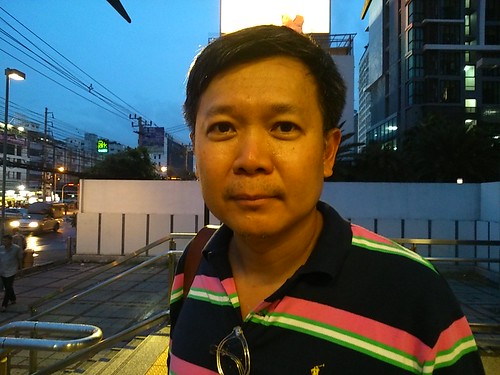
Hej
I dagens Bangkok Post kan man läsa om vad som ligger bakom att Journalisten Pravit Rojanaphruk kände sig tvingad att lämna The Nation, det var en grupp kollegor till honom ledda av den öppet gule TV värden Kanok Ratwongsakul som också är anställd på The Nation som pressade honom till detta.
http://www.bangkokpost.com/news/politics/695884/nation-journalist-pravit-quits-after-detention
Mvh isan lover

Hej
I dagens Prachatai redogör The Nations journalist för tiden i militärt förvar dag för dag och han uppger att han behandlades illa.
Han uppger att militären hotade honom med 15 års fängelse och att The Nation tvingade honom att säga upp sig efter frigivandet.
Veteran journalist Pravit says military ill-treated him during detention
Submitted by editor1 on Thu, 17/09/2015 - 10:08
Veteran journalist Pravit Rojanaphruk was detained incommunicado by the military junta for allegedly spreading false information about the junta on social media. Pravit is known for his anti-junta, anti-lèse majesté stance through his works and Twitter account @PravitR.Pravit spoke to Prachatai about his second period of detention by the junta, caused by two social media posts. One of the posts was his own tweet about the legitimacy of General Prayut Chan-o-cha’s rule. The second item was a three-page message on the messaging app Line regarding the appointment of secretaries in the Office of the National Security Council. Pravit has denied writing the second post.Pravit Rojanaphruk after being released on Tuesday.Pravit’s most recent detention lasted from 13 to 15 September, from Sunday until Tuesday. After about an hour of interrogation, Pravit was brought to an army base, where he was asked about his political stance, his affiliations with political groups and human rights organizations, and his reasons for disagreeing with Article 112, the lèse majesté law. Pravit said he denied being a red shirt or a follower of Thaksin Shinawatra, just that he did not agree with the junta rule. As for Gen Prayut Chan-o-cha, Pravit said he did not hold any personal grudges against him, but expressed his opinions according to his principles. Moreover, Pravit even disagreed with rhetoric mocking Prayut’s physical features.During his interrogation, Pravit found that the military officials were deeply concerned with social media.“They were paranoid about tweets, not even published news in The Nation,” said Pravit, who has become something of a popular speaker for his stance due to his many retweets. “People who hate me are blowing what I do way out of proportion,” he said, saying that the military were overreacting.After being interrogated at the army base from 15:30-21:00, Pravit was transported in a van for a little over an hour to another location. During the ride, Pravit was blindfolded with a cloth, so he did not know where he was taken to.He arrived in a room 4x4 meters wide, lit only by a neon light. All sources of natural light were blocked out. There was a surveillance camera in the room as well as a TV that only had Channel 3 and Thai PBS. A floor air conditioner stood with a sign saying “Kanchanaburi,” and there was also drinking water. The door was locked.Around 7-8 on Monday morning, food was brought to him. (He had been asked about meal options when he was still being held in Bangkok.)For the first 20 hours, Pravit did not get to talk to anyone, save for when he knocked on the door and asked to go out and get some fresh air. He felt that there was not enough air in the room. He was allowed to sit outside six times, but he had to be blindfolded the entire time he was outside of his room. This was markedly different from his first detention, when he was allowed to walk around freely in the camp and even play soccer with the guards.Pravit’s first military detention was in May 2014, two days after the coup d’état, when the junta’s National Council for Peace and Order (NCPO) detained him at an army base in Ratchaburi Province for a week.On Monday night, a high-ranking military officer came to talk to Pravit about politics, and whether Pravit wanted anything. Pravit answered that he wanted some sun, air, and shampoo.Next morning, he got some “air” when he was allowed to sit facing away from the open door for around 30 minutes.At about 2 pm on Tuesday, a document ordering him to cease all political activities was brought for him to sign. Then Pravit was brought back to the first army base, arriving there blindfolded at around 3 pm.There, Pravit was brought before a high-ranking military officer who informed him that a report had been filed against him, but the case had not proceeded yet and would be put on hold because “we’re all Thais here.” The officer emphasized that if Pravit disobeyed the NCPO’s orders again, then they would proceed with the case. Pravit was not informed about what case exactly was filed against him, only that the limitation of the charge is 15 years in jail.“Although I wasn’t tortured, but I was severely intimidated and infringed upon,” said Pravit.The officer offered to drop off Pravit at his home, but Pravit asked him to drop him off at a BTS skytrain station instead.The day after his release, Pravit was pressured by The Nation Group to resign from his job of 23 years at The Nation.Med vänlig hälsning isan lover
" a TV that only had Channel 3 and Thai PBS." Det låter ju helt förskräckligt, ring Ban kii moon genast! Vänta bara tills HRW kopplas in!
Kanske de ville straffa honom extra hårt då det inte var första varningen.
/ SatanG

HejI dagens Bangkok Post kan man läsa om vad som ligger bakom att Journalisten Pravit Rojanaphruk kände sig tvingad att lämna The Nation, det var en grupp kollegor till honom ledda av den öppet gule TV värden Kanok Ratwongsakul som också är anställd på The Nation som pressade honom till detta.
http://www.bangkokpost.com/news/politics/695884/nation-journalist-pravit-quits-after-detention
Mvh isan lover
Man kan bara spekulera hur dom diskuterat på tidningen. Men att offra en medarbetare istället för att riskera att dom stänger hela tidningen är ett ganska lätt val.
Då naturligtvis journalister har ansvar inför sina läsare att trycka på makten. Men dom har ännu större ansvar för sina aktieägare att inte stängas ner helt.
Jag håller naturligtvis med om att dylika förfaranden för att strypa det fria ordet är åt helvete. Men man ska även ha i åtanke att ett tidigare missbruk av det fria ordet skapat situationen som vi är i. Och det är alltid vinnaren som skriver historien.
Som exempel om den ryska tsaren 1917 hade haft större uppbackning. Så hade förmodligen historien i många länder sett annorlunda ut.
Skickat från min SM-N910F via Tapatalk
Logga in för att svara.